
How to Match Clothes to Your Skin Tone-Complete Guide 2026
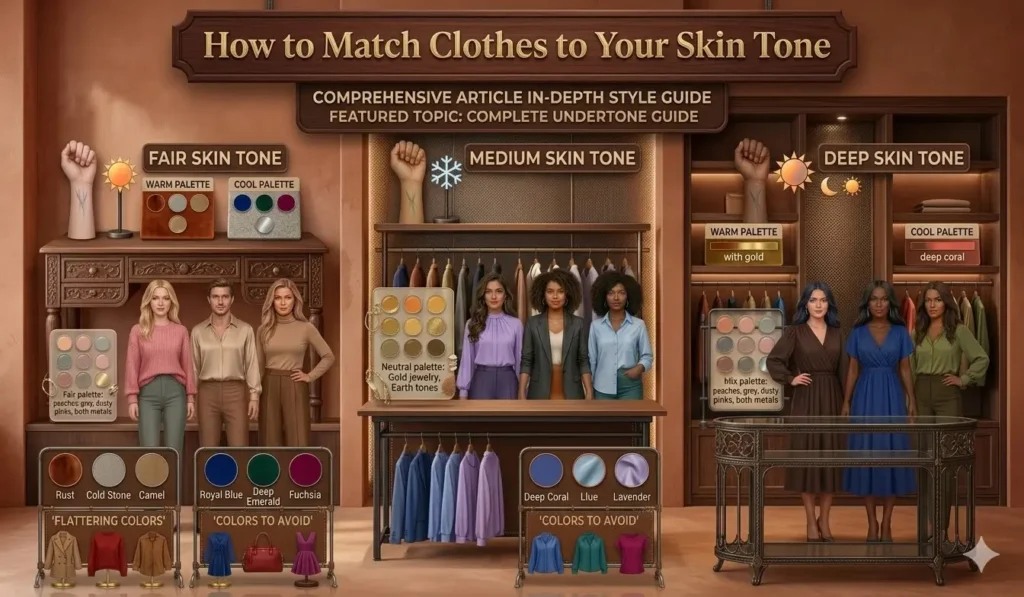
Introduction
Choosing the right outfit is not only about trends or style — color plays a huge role in how your clothes look on you. The same shirt can look amazing on one person and dull on another. The reason behind this is skin tone compatibility with clothing colors.
Understanding how to match clothes to your skin tone helps you select colors that naturally complement your complexion. When colors align with your undertone, your skin appears brighter, your features stand out, and your overall appearance looks more balanced.
In this guide, you will learn how to identify your skin tone, which clothing colors work best for different undertones, and how to build a wardrobe that enhances your natural complexion.
Understanding Skin Tone vs Undertone
Many people confuse skin tone with skin undertone, but they are different.
Skin tone refers to the surface colour of your skin. It can change with sun exposure and usually falls into these categories:
- Fair
- Light
- Medium
- Olive
- Dark
Undertone, however, is the subtle hue beneath your skin that remains constant. Clothing colors should mainly match your undertone, not just your skin tone.
There are three primary undertones:
- Warm undertones
- Cool undertones
- Neutral undertones
Identifying your undertone is the key step in learning how to match clothes to your skin tone.
According to dermatology research on skin undertones, understanding your natural undertone helps you choose clothing colors that enhance your overall appearance.
How to Identify Your Skin Undertone
1. Vein Test
Look at the veins on your wrist in natural light.
- Green veins → Warm undertone
- Blue or purple veins → Cool undertone
- Mix of both → Neutral undertone
This is one of the quickest ways to determine undertone.
2. Jewellery Test
Notice which jewelry suits you better.
- Gold jewellery looks better → Warm undertone
- Silver jewellery looks better → Cool undertone
- Both look good → Neutral undertone
3. White Fabric Test
Hold a pure white cloth near your face.
- Skin appears yellowish → Warm undertone
- Skin appears pink or rosy → Cool undertone
- Hard to tell → Neutral undertone
Learn More About The Quality Of The Fabric
Once you identify your undertone, selecting clothing colors becomes much easier.
Best Clothing Colors for Warm Skin Tones
Warm undertones typically have golden, yellow, or peachy hues. The goal is to wear colors that enhance that warmth.
Colors that work best
- Earthy tones
- Warm reds
- Mustard yellow
- Olive green
- Coral
- Warm browns
- Cream and off-white
These colors naturally complement warm complexions and make the skin appear more vibrant.
Colors to avoid
- Icy blues
- Cool greys
- Pure white
- Blue-based pinks
These shades can make warm skin appear dull or washed out.
Best Clothing Colors for Cool Skin Tones
Cool undertones contain pink, blue, or reddish hues beneath the skin. Colors with cool bases help highlight these tones.
Colors that look best
- Sapphire blue
- Emerald green
- Lavender
- Cool pink
- Burgundy
- Navy blue
- Charcoal grey
These shades enhance the natural contrast of cool complexions.
For summer clothing style –https://gurujicollection.in/best-summer-outfit-ideas-for-men-2026/
Colors to avoid
- Orange
- Mustard yellow
- Camel
- Warm browns
Warm colors can clash with cool undertones and overpower the natural skin hue.
Best Clothing Colors for Neutral Skin Tones
Neutral undertones are the most versatile. People with neutral skin tones can wear both warm and cool colors comfortably.
Colors that work especially well
- Soft white
- Dusty pink
- Jade green
- Teal
- Medium blue
- Peach
Because neutral undertones sit between warm and cool, they can experiment with a wider color palette.
However, extremely bright neon colors or overly muted tones may still overpower natural features.
For winter clothing-https://gurujicollection.in/smart-casual-mens-winter-outfits-stay-warm/
Matching Clothing Colors to Different Skin Tones
Besides undertone, overall skin depth also influences clothing choices.
Fair Skin
Best colors:
- Emerald green
- Royal blue
- Burgundy
- Lavender
Avoid very pale shades like beige or light yellow that blend into the skin.
Medium Skin
Best colors:
- Coral
- Teal
- Navy
- Deep purple
Medium complexions look great with both vibrant and deeper shades.
Dark Skin
Best colors:
- Bright yellow
- Electric blue
- Magenta
- White
- Metallic tones
Rich contrast between skin and clothing colors creates a striking visual effect.
Examples of Matching Clothes to Skin Tone
Here are practical outfit examples.
Example 1: Warm undertone
Outfit combination:
- Olive green shirt
- Dark brown chinos
- Tan shoes
This palette enhances the golden warmth of the skin.
Example 2: Cool undertone
Outfit combination:
- Navy blue blazer
- White shirt
- Grey trousers
Cool tones create a clean and balanced appearance.
Example 3: Neutral undertone
Outfit combination:
- Teal shirt
- Black jeans
- White sneakers
Neutral undertones allow mixing of both warm and cool colors.
Expert Tips for Choosing the Right Clothing Colors
1. Start with neutral wardrobe pieces
Build your wardrobe around versatile colors like:
- Navy
- Grey
- White
- Black
Then add accent colors based on your undertone.
2. Use contrast wisely
Higher contrast between skin tone and clothing color creates a stronger visual impact.
For example:
- Dark skin + white clothing
- Fair skin + deep jewel tones
3. Consider lighting
Clothing colors may look different indoors vs outdoors. Always check how colors appear in natural light.
4. Use color layering
Layering different shades can balance your overall look.
Example:
- Neutral shirt
- Colored jacket
- Dark pants
Common Mistakes When Matching Clothes to Skin Tone
Ignoring undertone
Most people focus only on light or dark skin but forget undertone. Undertone is actually more important for color selection.
Wearing extremely close shades
Clothes that closely match your skin tone can make your outfit look flat.
Following trends blindly
Just because a color is trending does not mean it suits every complexion.
Wearing too many bold colors together
Even if colors match your skin tone, too many bright shades can overwhelm the outfit.
Conclusion
Learning how to match clothes to your skin tone is one of the simplest ways to upgrade your personal style. When clothing colors complement your undertone, your skin appears healthier, your features become more defined, and your outfits look naturally balanced.
Start by identifying your undertone — warm, cool, or neutral — and then choose colors that enhance it. With the right combinations, even simple outfits can look polished and stylish.
Building a wardrobe around colors that suit your complexion will not only improve your appearance but also make dressing easier and more confident every day.
FAQs
1. How do I know which colors suit my skin tone?
Check your skin undertone using the vein test or jewellery test. Once you know whether your undertone is warm, cool, or neutral, you can choose clothing colors accordingly.
2. What colors look best on warm skin tones?
Warm skin tones look best in earthy colors like olive green, mustard yellow, coral, warm reds, and cream.
3. Which colors should cool undertones wear?
Cool undertones should wear jewel tones like sapphire blue, emerald green, lavender, and burgundy.
4. Can neutral skin tones wear any color?
Yes, neutral undertones can wear both warm and cool colors, but balanced shades like teal, dusty pink, and soft white usually look best.
5. Why do some colors make my skin look dull?
If a clothing color clashes with your undertone, it can wash out your complexion and reduce natural contrast. Matching colors with undertone prevents this issue.
